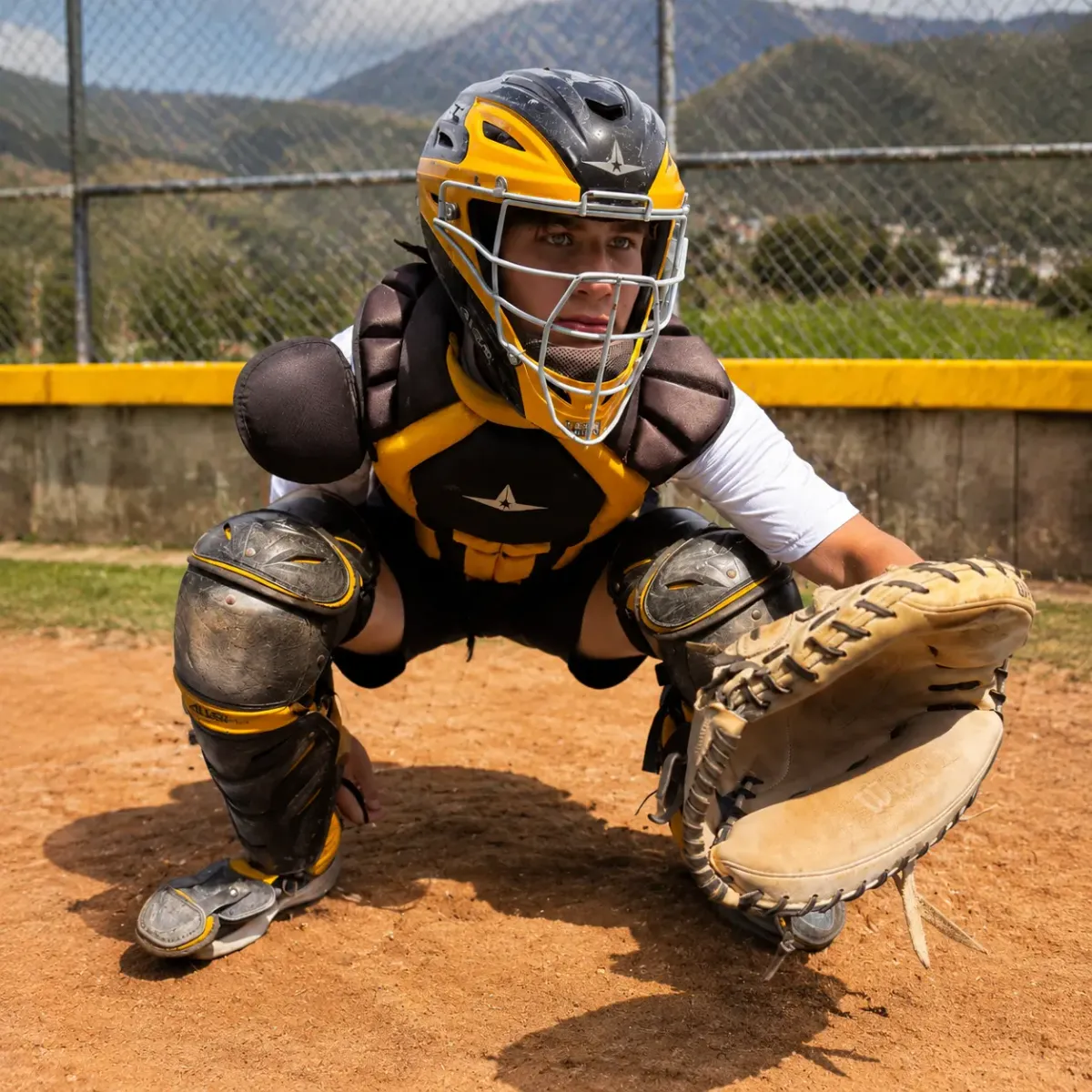
Behind the Plate: Receiving, Blocking and Throwing
A catcher's value starts with three physical jobs: receiving the pitch, blocking the ball in the dirt and throwing out runners. Armando Ávila is a right-handed catcher from Caracas, Venezuela, now training and competing in South Florida, and his catcher training has focused on receiving, blocking and throwing. This post explains what good work looks like in each of the three and what a coach should look for on catcher video.
Receiving: the job on every pitch
Receiving is the skill a catcher uses most. Every pitch ends in the glove, and how it gets there affects the pitcher's confidence and what the umpire sees.
Good receiving starts before the pitch. The catcher sets a stance low enough to give the pitcher a clear target and balanced enough to move in any direction. With runners on base, the stance rises a little so the feet are ready to block or throw. The glove stays relaxed until the ball arrives, then catches it with as little extra movement as possible.
Good receiving work usually builds three habits:
A stable target. A glove position the pitcher can trust from the first pitch to the last.
Soft, quiet hands. Catching the ball without stabbing at it or letting it push the glove out of the zone.
Stance by situation. A lower, more comfortable setup with the bases empty and a more athletic one with runners on.
Presenting pitches on the edge of the zone, usually called framing, grows out of these habits. It also belongs to the thinking side of the position, so this post stays with the mechanics of the catch.
Blocking: keeping the ball in front
A pitcher throws a two-strike breaking ball in the dirt with conviction when he trusts the catcher behind him. Blocking is how a catcher earns that trust.
The goal of a block is not to catch the ball. It is to keep the ball in front of the plate so runners cannot advance. The basics are easy to describe and hard to repeat under pressure:
Drop to the knees quickly, with the glove filling the gap between the legs.
Angle the body toward the plate so the ball rebounds in front, not to the side.
Round the shoulders and tuck the chin so the chest absorbs the ball softly.
Recover fast, find the ball and be ready to throw if a runner breaks.
Catchers usually train blocking through repetition: straight blocks, blocks to each side, and blocks followed by a quick recovery. The aim is a reaction that no longer needs thinking about.
Throwing: footwork, transfer and accuracy
Stopping the running game depends on the catcher's throw, and arm strength is only one part of it. A quick, accurate throw usually comes from clean footwork and a fast transfer.
Footwork. The catcher moves his feet to line his body up with the target. Extra steps add time. Too few cost balance and accuracy.
Transfer. The ball moves from the glove to the throwing hand. A clean transfer finds a four-seam grip as often as possible, which makes the throw straighter and easier to handle.
Accuracy. A throw that arrives on the bag, at the right height for the tag, is worth more than a harder throw that pulls the fielder off the base.
Coaches often sum up this sequence with pop time: the time from the moment the pitch hits the catcher's glove to the moment the throw reaches the fielder at second base. It measures footwork, transfer and arm together.
Receiving, blocking and pop time were specific areas of Armando's catcher training at Academia Masa and Wyn Academy. His verified pop time and throwing velocity will be published once measured, with where and how they were taken.
What to watch on catcher video
Video lets a coach judge these skills before seeing a catcher in person. This checklist works for any catcher, Armando included.
Clip type | What to look for |
|---|---|
Receiving (bullpen or game) | Stable target before the pitch; quiet glove at the catch; pitches on the edges held without the glove drifting; stance adjusts with runners on |
Blocking drills | Speed of the drop; body angled toward the plate; ball stays in front; quick recovery and eyes finding the ball |
Blocks in a live game | Same mechanics with real pitches and real runners; no flinching on breaking balls in the dirt |
Throws to second base | Footwork in line with the target; clean four-seam transfer; throw arrives on the bag at tag height; consistency across several throws |
Full-game catching | Energy and stance late in the game; whether mechanics hold up when tired; interaction with the pitcher between pitches |
A short clip shows a skill. A longer stretch of game shows whether the skill holds up when the catcher is tired.
FAQ
What does pop time measure?
The time from the pitch hitting the catcher's glove to the throw reaching the fielder at second base. It combines footwork, transfer and arm strength in one number.
Why does a four-seam grip matter on a throw to second?
A four-seam grip makes the ball carry straighter, so the throw is easier for the fielder to handle and tag with.
Why does a catcher block a ball in the dirt instead of trying to catch it?
Blocking keeps the ball in front of the plate, which stops runners from advancing. Reaching for it with the glove alone risks the ball getting past him.
Coaches and recruiters can ask through the Contact page which receiving, blocking and throwing clips are currently available. Contact Armando's representative and include the clips you would like to see.
